

The Power of Editing in Interior Design: Why Beautiful Homes are Never an Accident
At first glance, a beautifully designed home may seem effortless. The colors flow, the furniture feels perfectly placed, and every detail appears intentional. But behind every cohesive space is a careful balance of two essential elements: beauty and function. At Wellhouse & Co, our mission is to design homes that are not only visually compelling but also deeply livable spaces that support the way our clients truly live, day in and day out.
Here’s a behind-the-scenes look at how we thoughtfully balance form and function in every project.
1. Design Starts with Real Life, not the Floor Plan
Before we think about finishes or furnishings, we focus on how a home is actually used. Morning routines, where bags land after school, how often clients host, how they want to feel at the end of a long day—these details shape every decision that follows.
Real life includes backpacks that never quite make it to the mudroom hooks, guests who always congregate in the kitchen no matter how thoughtfully the living room is arranged, and at least one chair that everyone fights over! We design for that reality—not the version of life that only exists on reveal day.
A living room isn’t successful because it looks polished. It’s successful because it comfortably holds family movie nights, quiet mornings, and full gatherings without feeling crowded or precious. Editing at this stage means resisting the urge to design the image in your mind (or found online) and instead designing for real rhythms of life.
2. Function Is the Quiet Structure Behind Beauty
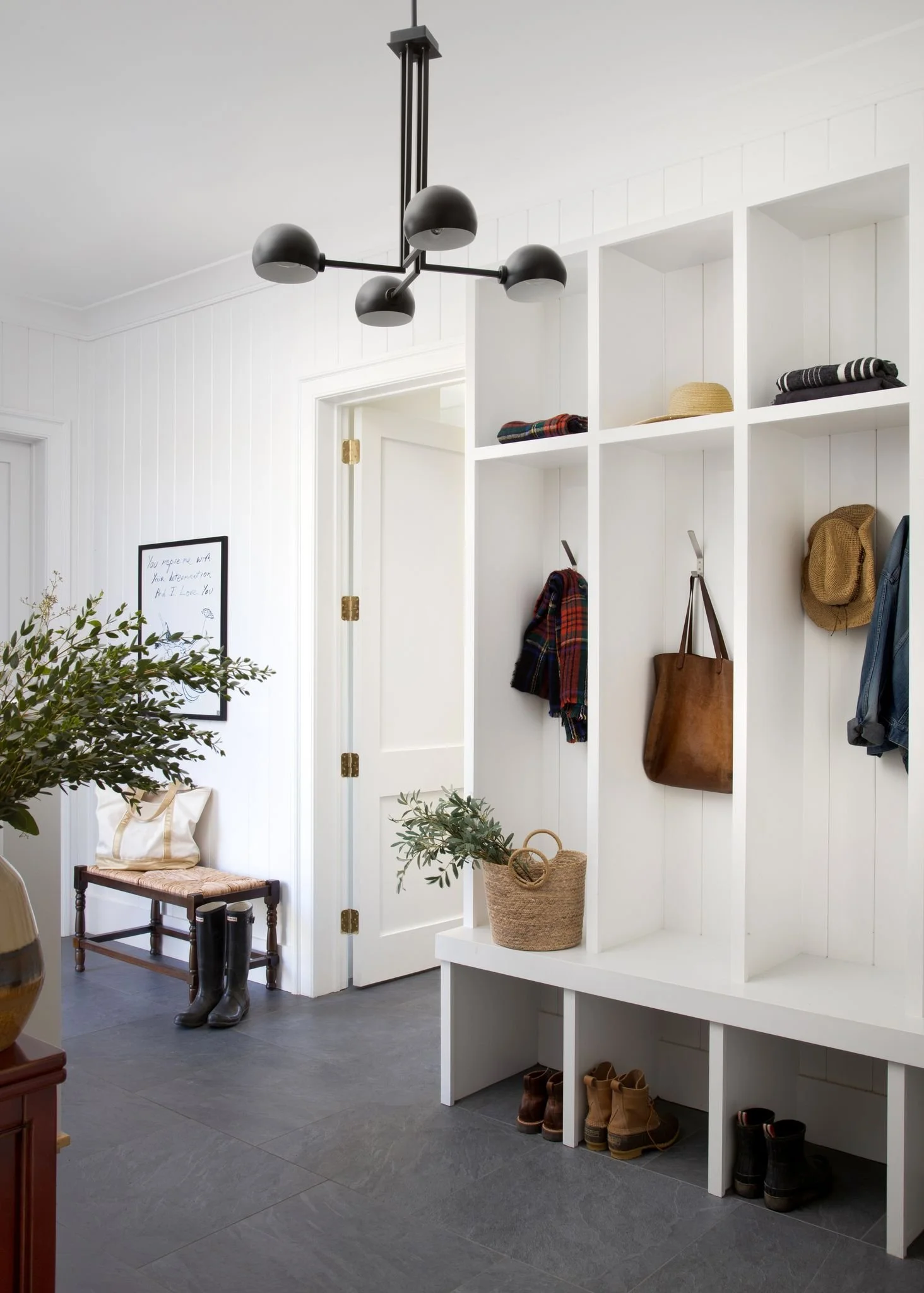
When a home feels intuitive, it’s because the functional decisions were made early and intentionally. Circulation paths make sense. Storage is integrated instead of added later. Rooms are sized and arranged to support how they’re used—not just how they appear on a plan.
Editing here often means saying no to unnecessary square footage, overly complex layouts, or design features that look impressive but don’t improve daily life. When the framework is right, the design doesn’t have to work as hard to feel beautiful—it simply feels natural.
3. Fewer Materials, Better Decisions
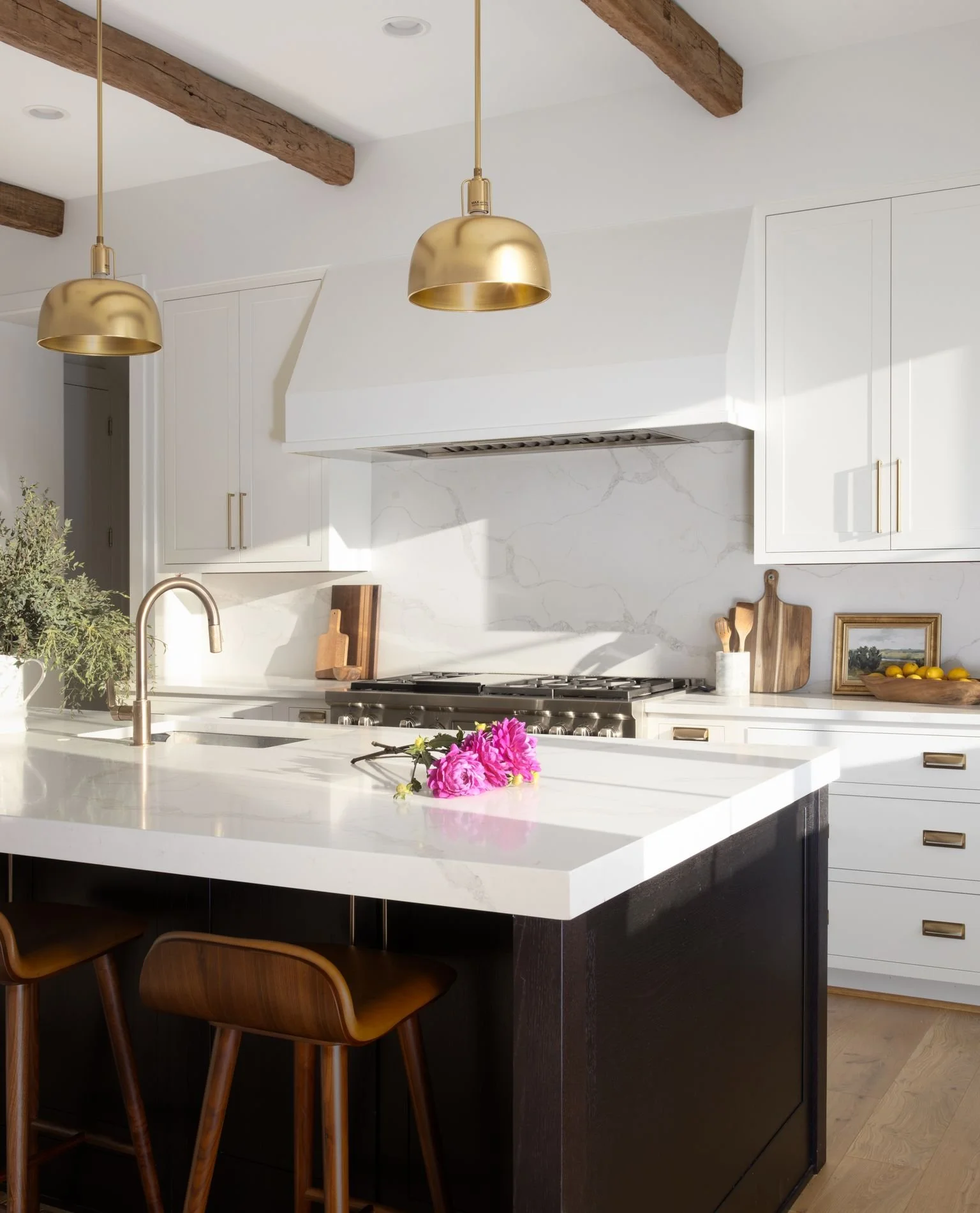
One of the most common ways homes begin to feel overwhelming is through too many competing materials and finishes. While variety can be exciting, restraint is what creates cohesion and longevity.
More options don’t usually lead to better outcomes—just longer decision meetings and a creeping sense that something is “off” without knowing why. Editing is how we save our clients from a home that feels like five good ideas having a meeting at the same time (and trust us, it’s sometimes a temptation WE need to resist ourselves).
By guiding clients toward a refined, intentional palette, we create homes that feel calm, elevated, and unified rather than busy or trend-driven. Repetition isn’t boring—it’s grounding.
4. Layering Comfort Into the Design
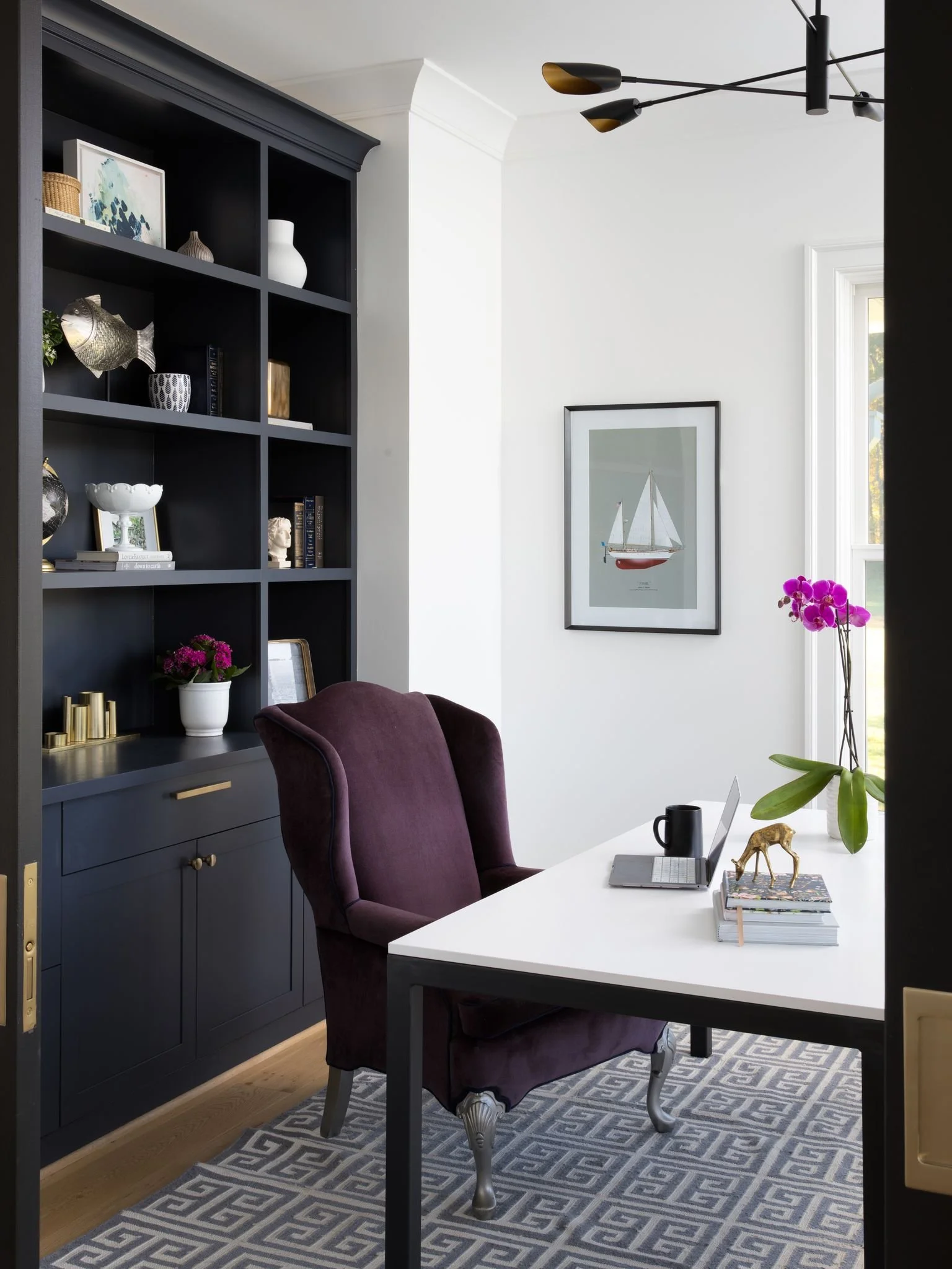
Comfort is a key part of function, yet it’s often overlooked in favor of visual appeal. We believe the most beautiful spaces are the ones that invite you to stay awhile.
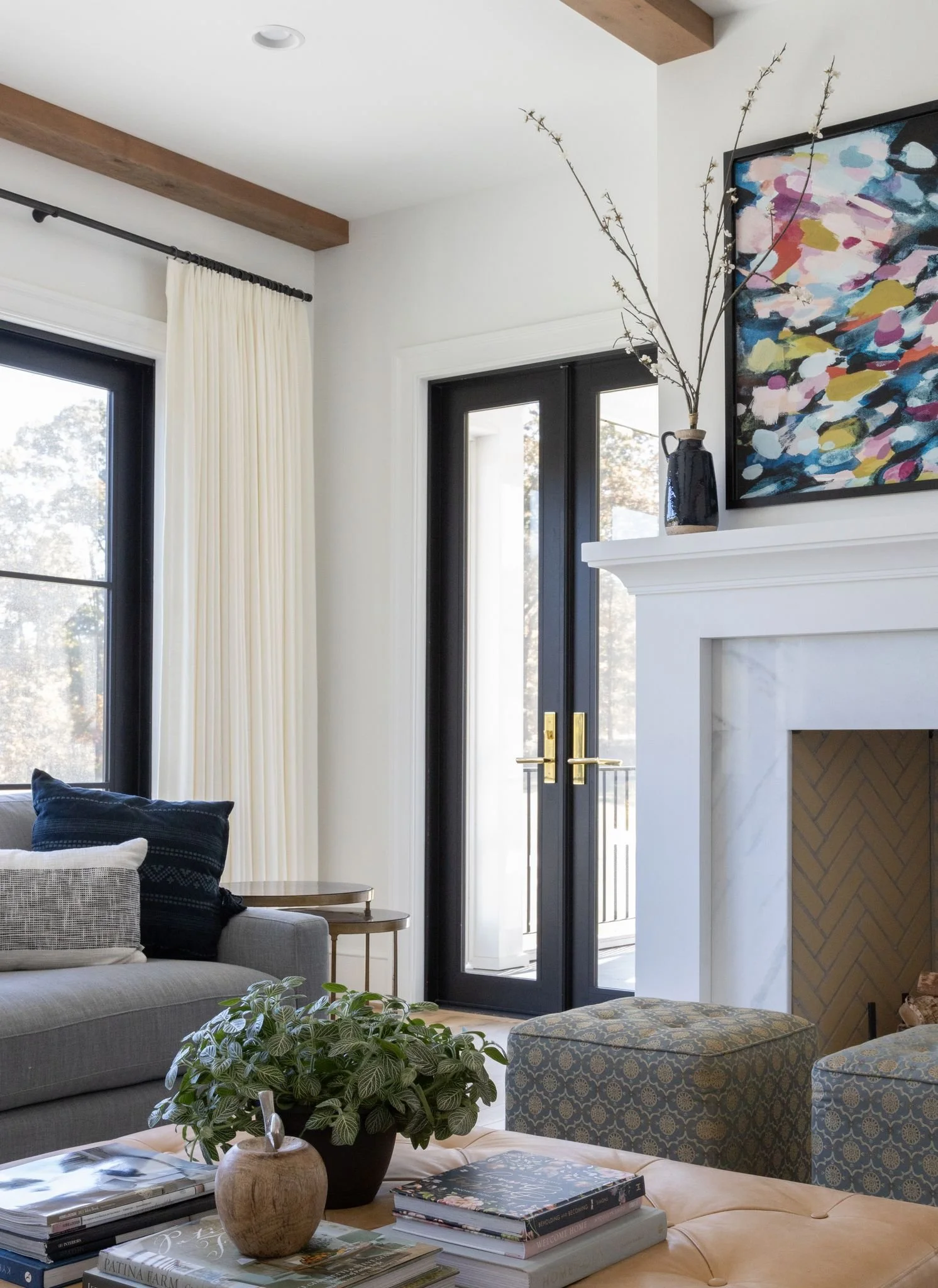
From selecting upholstery that feels as good as it looks to layering lighting that supports different moods and activities, we design with comfort in mind. These choices may be subtle, but they are what transform a space from simply styled to truly lived-in.
5. Editing for Comfort Is Editing for Life
Comfort is often the first thing sacrificed when design decisions are made visually. But comfort is function.
We pay close attention to how seating feels, how lighting shifts from day to night, and how spaces invite people to linger. A room can be beautifully styled, but if no one wants to sit in it, it’s not finished. If guests perch politely on the edge of a sofa and leave early, we consider that valuable feedback.
Editing here means choosing fewer pieces that do their job exceptionally well—pieces that welcome real use, not just admiration.
6. Homes That Adapt, Not Just Impress
True balance considers the future. Families grow, routines change, and homes should be able to evolve without major disruption.
By prioritizing flexible layouts, timeless materials, and thoughtful planning, we help clients invest in homes that remain supportive and relevant for years to come. Editing is what protects that investment. And much of this work is invisible once the home is complete—and that’s the point. If we’ve done our job well, no one notices the editing. They just feel calm, comfortable, and oddly at ease without knowing exactly why.
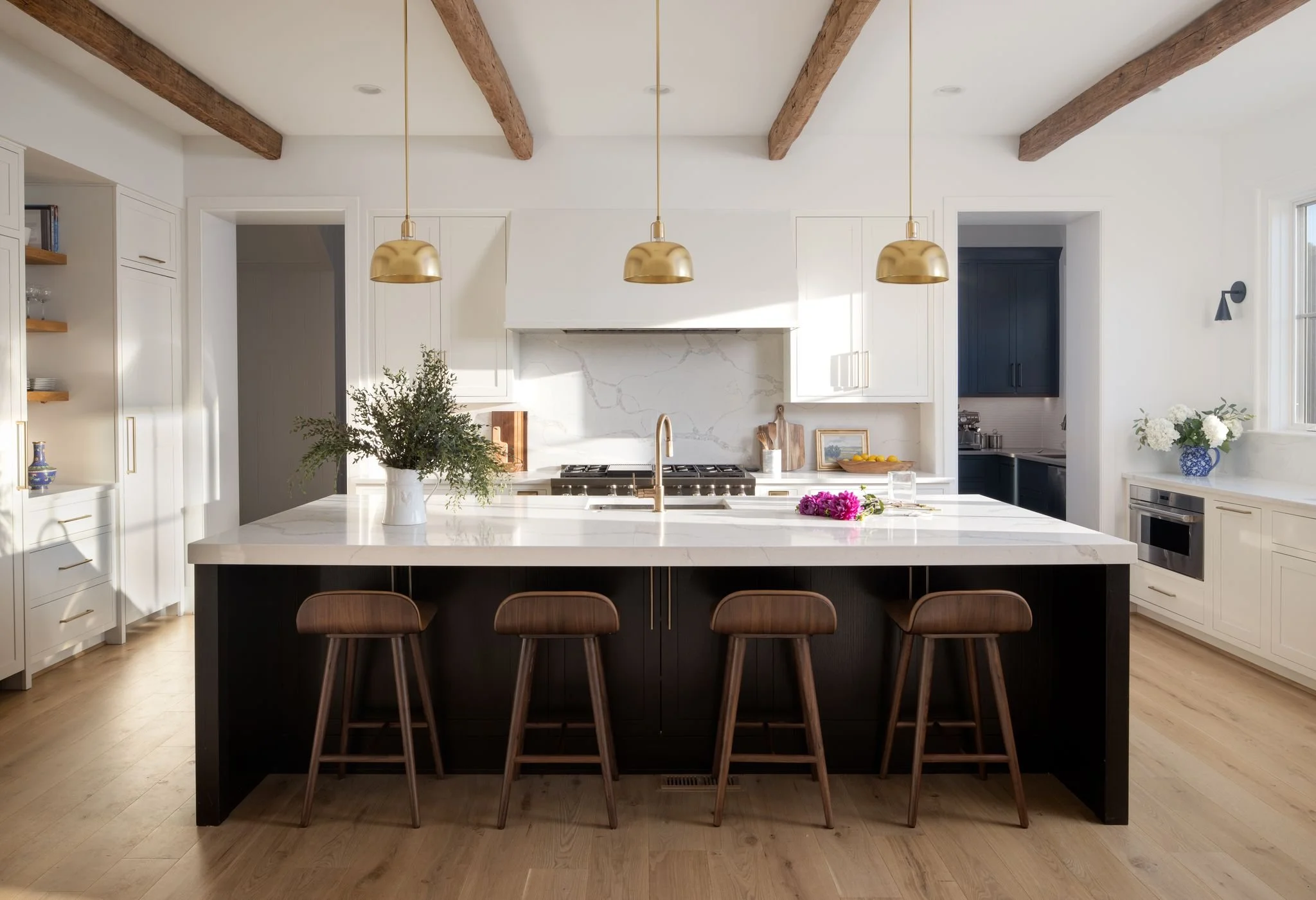
The Power of Saying No…
Editing isn’t about having less for the sake of less. It’s about creating space—for life, for rest, for connection. It’s how we restore order and calm, and how we design homes that quietly support the people who live in them every day. At Wellhouse & Co, this is the work we do behind the scenes—so our clients can experience homes that feel effortless, grounded, and deeply livable.